
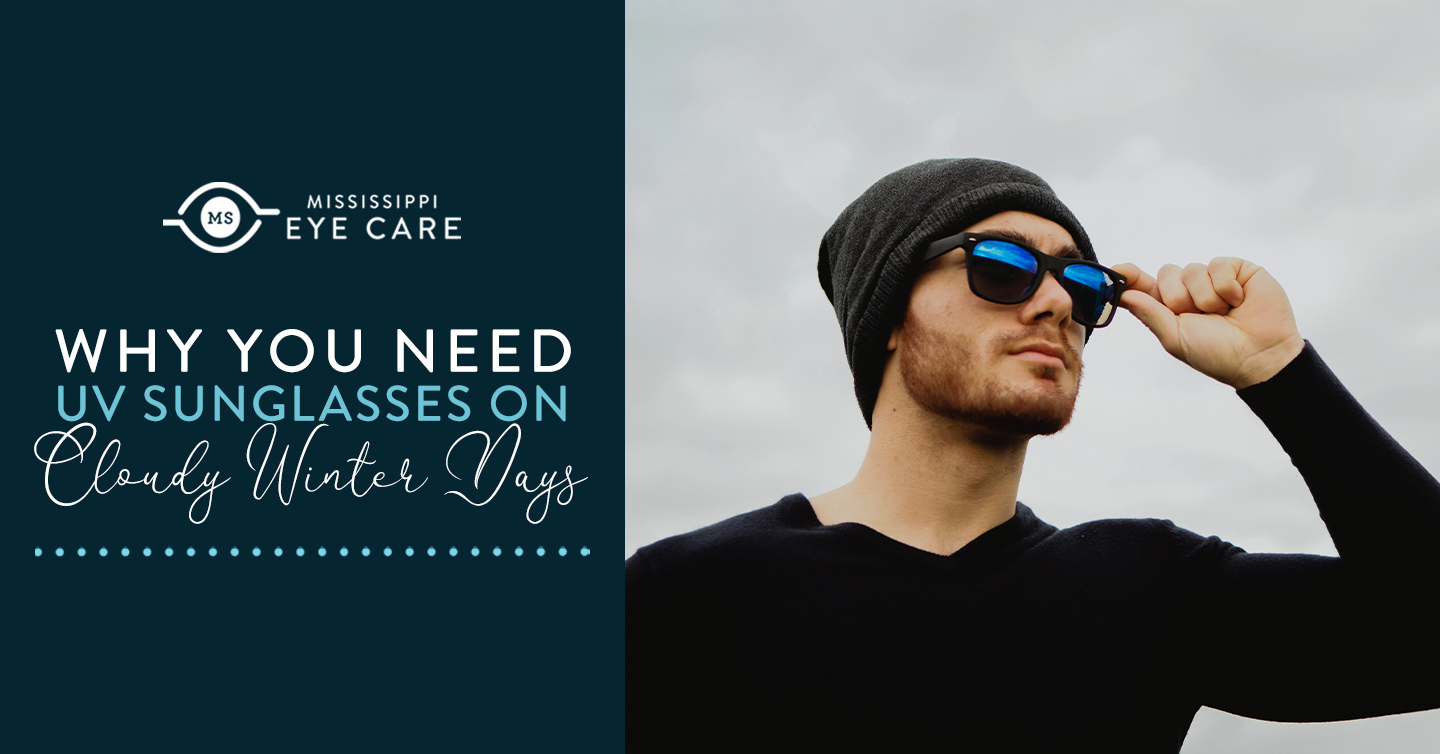
As February settles in, the thought of wearing sunglasses might seem unnecessary, especially on chilly, overcast winter days. However, UV rays persist year-round, regardless of season or weather conditions. Wearing UV sunglasses on cloudy winter days is crucial to protecting your eyes from potential harm. Let’s explore why these seemingly benign days are actually a hidden threat to your eye health.
Clouds don’t block UV rays.
One common misconception is that clouds shield us from harmful UV rays. In truth, up to 80% of the sun’s UV radiation can penetrate cloud cover, making these days as risky as sunny ones. This exposure can lead to both short-term and long-term consequences for your eye health, such as photokeratitis—a temporary yet painful sunburn of the eye’s surface often referred to as snow blindness.
Snow reflection amplifies UV exposure.
If you’re in an area blanketed with snow, it’s important to recognize that snow can reflect up to 80% of UV rays. This reflection can effectively double your exposure to harmful rays.
Winter activities like skiing or snowboarding, or even a casual walk in a snowy landscape, can significantly increase your risk of eye damage. Wearing UV-blocking sunglasses helps mitigate this risk by providing an essential barrier against these intense reflections.
The low winter sun angle.
During winter, the sun sits lower in the sky, meaning it can shine directly into your eyes more frequently than in other seasons. This low angle increases the chances of direct exposure, which can lead to chronic conditions such as cataracts and macular degeneration over time.
Wearing sunglasses that block 99-100% of UVA and UVB rays is a simple yet effective way to protect your eyes from these risks, ensuring your vision remains clear and healthy.
Higher altitude, higher risk.
For those who enjoy winter sports at higher altitudes, the risk is even greater. The thinner atmosphere at these elevations provides less natural filtration of UV rays, increasing their intensity. Whether you’re hitting the slopes or enjoying a winter hike in the mountains while vacationing, UV sunglasses on cloudy winter days are indispensable for protecting your eyes from increased UV exposure.
Cumulative damage is real.
It is crucial to remember that UV damage accumulates over time. Even if you don’t notice immediate discomfort, repeated exposure to UV rays can lead to serious eye health issues, including accelerated aging of the eyes and an increased risk of skin cancer around the delicate eye area. Therefore, developing the habit of wearing UV sunglasses year-round is essential for long-term eye protection.
Summary
To summarize, UV sunglasses on cloudy winter days are not just a fashion statement—they are a necessary precaution to protect your eyes from unseen dangers. By investing in high-quality UV-blocking sunglasses, you can enjoy the winter season without compromising your eye health.
Visit your local Mississippi Eye Care for the latest styles and trends, including the perfect pair of UV sunglasses for cloudy winter days. Check out our blogs for more eye care and vision health.