
As the holiday season brings extra cheer and a house full of guests, an unexpected eye mishap is the last thing you want on your wish list. Assembling a complete emergency eye care kit is a simple step to keep you and your guests safe. Read on to discover the essential supplies every host should keep stocked to keep your home and vision bright and worry-free.
The importance of having an emergency eye care kit.
According to the American Academy of Ophthalmology and Prevent Blindness, roughly half of all eye injuries happen right at home during everyday activities like cooking, cleaning and yard work. A fully stocked emergency eye care kit lets you act immediately in those crucial first minutes to stabilize an injury and prevent lasting damage before you seek medical care.
Store your clearly marked kit in a known, accessible location—and consider keeping a second one in the garage or workshop for quick access outdoors.
Common eye emergencies.
Everyday accidents can quickly lead to severe eye emergencies, from chemical splashes to objects in the eye. Chemical exposures require immediate flushing with clean water or eyewash for at least 15 minutes, while foreign objects stuck in the eye should never be pulled out; instead, cover them loosely with a shield until you reach emergency medical care.
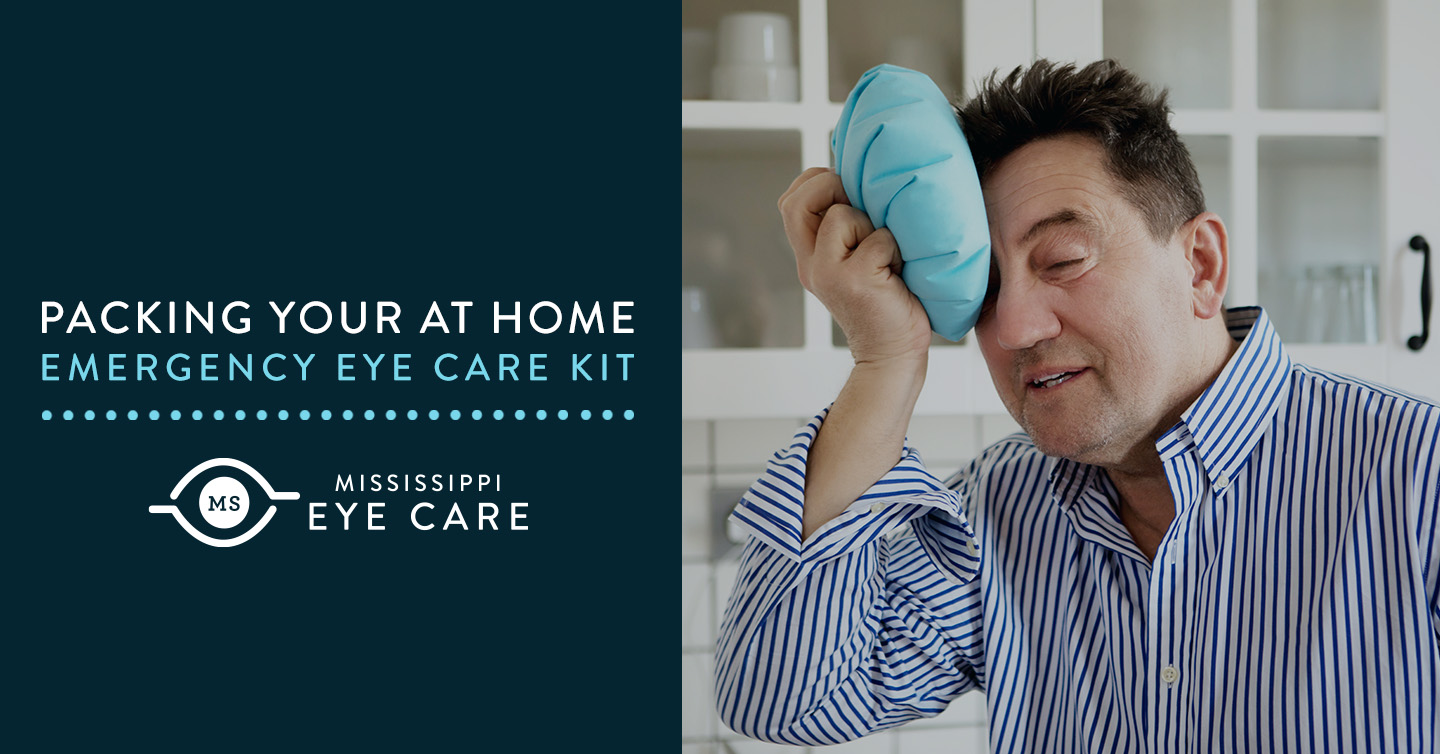
For blunt force trauma, apply a gentle cold compress to the surrounding bone, while small floating debris like dust or wood chips should be flushed out without rubbing the eye to prevent corneal scratches. Any incident causing severe pain, bleeding or vision changes demands prompt evaluation by an eye care professional.
What to include in your kit.
However, avoid packing items that can cause further damage, such as tweezers, cotton balls or medicated eye drops. Using only sterile, commercially prepared supplies help protect the eye without risking infection or added trauma.
How to reduce eye injuries at home.
Preventing accidents before they happen is just as important as having your emergency eye care kit ready for the unexpected. Wearing ANSI-certified safety goggles during high-risk tasks like mowing the lawn, handling power tools or mixing cleaning products eliminates most at-home eye injuries. Also, keep household chemicals securely locked away, inspect your work area for flying debris, and supervise children during crafts to keep your home safe for everyone.
Summary
While an emergency eye care kit is your best first line of defense, remember that home first aid is just the beginning. Reach out to an eye care professional right away if you experience a serious eye emergency—such as Mississippi Eye Care!
For more expert tips, explore more of our blogs.


